










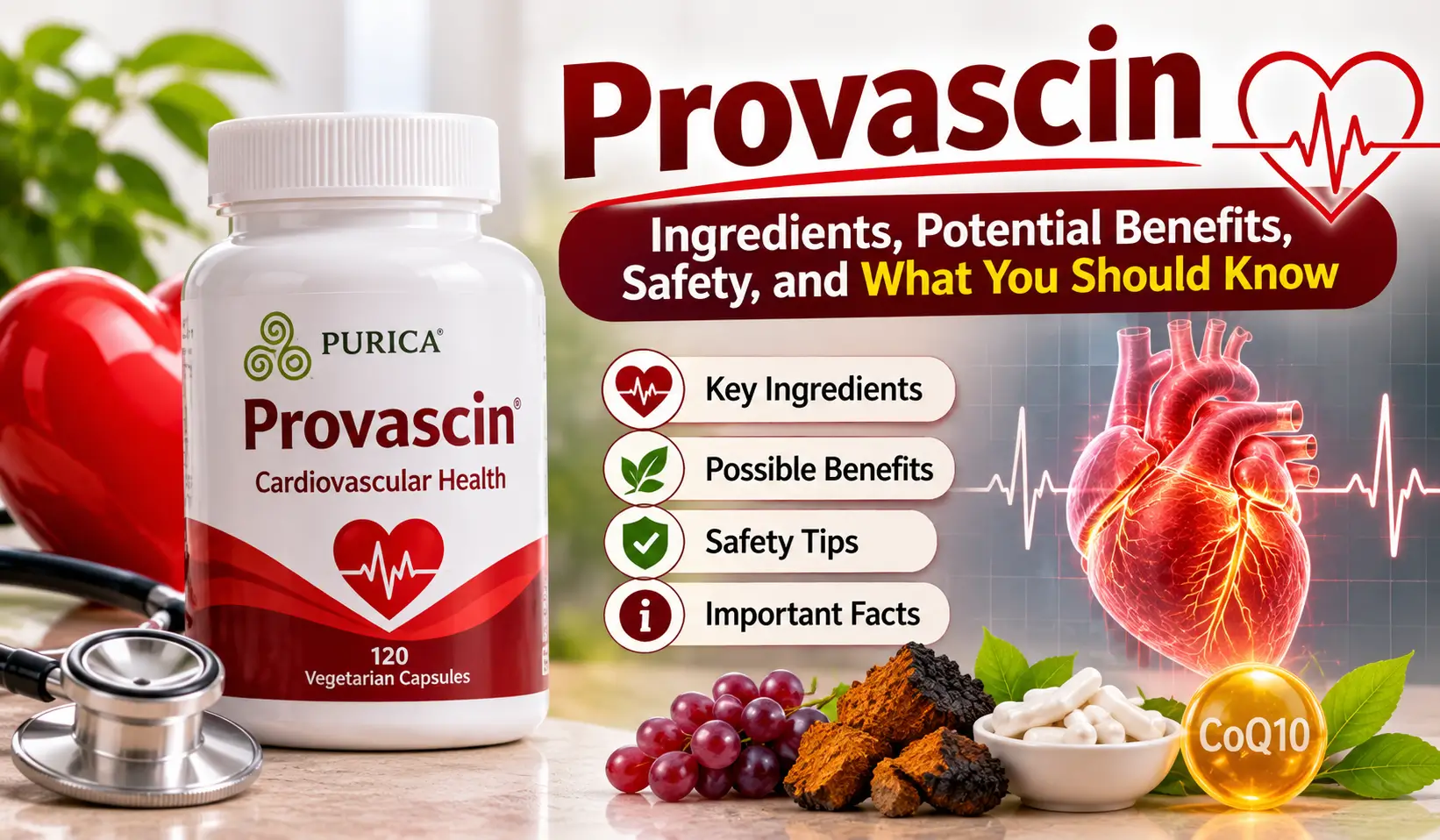
Provascin is a name associated with a cardiovascular health supplement historically marketed under the PURICA brand. The product attracted attention for its combination of nutritional and plant-based ingredients, including L-carnitine, Coenzyme Q10, Chaga mushroom, and grape seed extract. It was promoted for cardiovascular wellness, circulation, antioxidant support, and energy metabolism.
However, there is an important distinction between a supplement’s advertised benefits and its scientifically established effects. Although some ingredients found in Provascin have been studied individually, that does not prove that the complete formula can prevent or treat heart disease, high cholesterol, or other medical conditions.
Another source of confusion is the availability of different online descriptions. Some websites present Provascin as a cardiovascular medicine, while others describe it as a general wellness supplement. The best-documented product is a dietary supplement rather than a prescription medication.
This article explores Provascin’s background, ingredients, potential benefits, scientific evidence, safety considerations, and availability to help readers understand what the product actually represents.
What Is Provascin?
Provascin is the name of a multi-ingredient nutritional supplement historically associated with PURICA, a Canadian natural health product brand.
The original product was marketed primarily for cardiovascular and circulatory support. It combined several nutritional compounds and plant-derived ingredients intended to support different biological processes, including cellular energy production and antioxidant activity.
Unlike prescription cardiovascular medications, Provascin was sold as a supplement in capsule form. It was not intended to replace medical treatment for heart disease, high blood pressure, or high cholesterol.
Historical product listings identify PURICA Provascin as a real commercial supplement, although its current availability appears limited. Some retailers have marked previous listings as discontinued or unavailable.
It is also important to understand that the name Provascin should not automatically be associated with every supplement currently advertised under similar descriptions. Different sellers may use similar terminology or publish inconsistent ingredient information.
What Ingredients Were Found in Provascin?
One of the most interesting aspects of the original PURICA Provascin formula was its combination of nutritional and botanical ingredients.
Historical product information identifies eight principal ingredients. Understanding their individual roles provides a clearer picture of how the supplement was formulated.
1. L-Carnitine
L-carnitine is a naturally occurring compound involved in energy metabolism. It helps transport certain fatty acids into mitochondria, where they can be used in energy production.
The body produces L-carnitine naturally, and it is also obtained through foods such as meat and dairy products.
Researchers have investigated its potential relationship with exercise performance, metabolic processes, and cardiovascular health. However, findings from individual studies cannot establish that a supplement containing L-carnitine will provide the same results for every person.
2. Alpha-Ketoglutaric Acid
Alpha-ketoglutaric acid is a compound involved in the body’s energy-producing metabolic pathways.
It participates in the citric acid cycle, a process that helps cells generate energy from nutrients.
Its inclusion in Provascin reflected the formula’s focus on cellular metabolism and general nutritional support.
However, the presence of alpha-ketoglutaric acid in a supplement does not establish that the finished product improves cardiovascular function or prevents medical conditions.
3. Chaga Mushroom
Chaga is a medicinal mushroom traditionally used in different wellness practices.
It contains naturally occurring compounds that have attracted scientific interest, particularly because of their antioxidant properties.
Antioxidants help protect cells against oxidative damage, although laboratory findings do not automatically translate into proven health benefits in humans.
Chaga has been studied for several potential biological effects, but more reliable human research is needed before making strong claims about its effectiveness for cardiovascular health.
4. Coenzyme Q10 (CoQ10)
Coenzyme Q10 is a naturally occurring compound found in nearly every cell of the human body.
It plays an important role in mitochondrial energy production and also acts as an antioxidant.
CoQ10 has received attention in nutritional and cardiovascular research because of its involvement in cellular energy metabolism.
Some studies have investigated its potential effects in people with particular health conditions. However, the evidence varies depending on the condition, dosage, and population being studied.
Its presence in Provascin should not be interpreted as proof that the complete supplement improves heart health.
5. Betaine Hydrochloride
Betaine hydrochloride is a compound commonly associated with digestive supplements.
It is generally discussed in relation to stomach acidity and digestive processes.
Its inclusion in a multi-ingredient formula does not necessarily indicate a direct cardiovascular benefit.
People considering products containing betaine hydrochloride should review the complete ingredient information and seek professional advice when they have existing digestive or medical conditions.
6. Alpha-Lipoic Acid
Alpha-lipoic acid is an antioxidant compound involved in cellular energy metabolism.
It has been investigated for its potential relationship with oxidative stress, glucose metabolism, and nerve health.
Research into alpha-lipoic acid has produced varying results depending on the application and dosage.
Although it is an interesting nutritional ingredient, its presence in Provascin does not demonstrate that the product can treat diabetes, circulation problems, or cardiovascular disease.
7. Grape Seed Extract
Grape seed extract contains plant compounds known as polyphenols, including proanthocyanidins.
These compounds have attracted attention because of their antioxidant properties.
Researchers have explored grape seed extract in studies involving blood pressure, vascular function, and oxidative stress.
However, the effectiveness of an extract depends on its composition, concentration, and dosage. A small amount included in a combination supplement cannot automatically be compared with amounts used in individual research studies.
8. Green Tea Extract
Green tea extract contains naturally occurring plant compounds called catechins.
One well-known catechin is epigallocatechin gallate, commonly abbreviated as EGCG.
Green tea compounds have been investigated for their antioxidant properties and potential metabolic effects.
However, concentrated green tea extracts are not automatically risk-free. Some high-dose products have been associated with liver-related safety concerns.
Consumers should pay attention to ingredient quantities and consult a healthcare professional before using unfamiliar supplements.
What Were the Potential Benefits of Provascin?
Provascin was marketed around several aspects of cardiovascular and general wellness. Its combination of ingredients was intended to support different biological functions.
However, these marketed purposes should be distinguished from clinically proven benefits.
Cardiovascular Wellness
The original supplement was positioned as a cardiovascular-support product.
Some of its ingredients have been investigated individually in research related to cellular energy, oxidative stress, and vascular health.
Nevertheless, there is insufficient product-specific clinical evidence to establish that Provascin prevents heart disease or improves cardiovascular outcomes.
Antioxidant Support
Several ingredients in the historical formula, including Chaga, grape seed extract, green tea extract, and CoQ10, contain or are associated with antioxidant compounds.
Antioxidants help protect cells against oxidative stress, which is involved in various biological processes.
However, consuming an antioxidant-containing supplement does not automatically prevent diseases or guarantee improved health.
Cellular Energy Metabolism
L-carnitine, CoQ10, and alpha-ketoglutaric acid are involved in different aspects of cellular metabolism.
These compounds have important biological functions, which explains why they have been included in various nutritional formulations.
However, the body’s natural metabolic processes are complex, and taking a combination supplement does not necessarily improve energy levels or physical performance.
General Nutritional Support
Provascin combined multiple ingredients rather than focusing on one vitamin, mineral, or nutritional compound.
Its formulation was intended to provide several types of nutritional support through one product.
Still, a multi-ingredient supplement is not automatically more effective than a simpler formula. Ingredient quantities, product quality, and individual nutritional requirements all matter.
Is There Scientific Evidence Supporting Provascin?
Scientific research is an important consideration when evaluating any health supplement.
In the case of Provascin, some individual ingredients have been investigated in laboratory studies and human research. However, evidence about individual ingredients should not be confused with evidence about the complete product.
For example, research involving CoQ10 does not automatically prove that a combination containing CoQ10, Chaga, and L-carnitine produces the same effects.
Similarly, laboratory findings about antioxidant compounds cannot establish that Provascin prevents cardiovascular conditions in humans.
A reliable assessment requires well-designed clinical studies involving the exact formula, appropriate dosage, and relevant patient populations.
There is insufficient publicly established clinical evidence demonstrating that the complete Provascin formula treats or prevents cardiovascular disease.
Readers should therefore approach claims involving dramatic improvements in cholesterol, blood pressure, circulation, or heart function with caution, especially when those claims are not supported by identifiable clinical research.
Is Provascin a Medicine or a Dietary Supplement?
Provascin is best understood as a historical dietary or natural health supplement rather than a prescription cardiovascular medicine.
This distinction matters because supplements and prescription medications serve different purposes and are subject to different regulatory requirements.
Prescription medicines undergo specific approval processes for their intended medical uses. Dietary supplements are generally marketed to support nutritional or general wellness needs, depending on the applicable country’s regulations.
A supplement’s availability does not mean that it has been approved to treat a particular disease.
Therefore, Provascin should not be considered an alternative to prescribed cholesterol medication, blood pressure treatment, or other cardiovascular therapies.
Anyone managing a diagnosed health condition should follow the treatment plan recommended by their healthcare professional.
Possible Side Effects and Safety Considerations
Although nutritional supplements are often marketed as natural products, natural ingredients can still produce unwanted effects or interact with medications.
Provascin’s historical formula contained multiple ingredients, making it particularly important to consider individual health circumstances before using a similar product.
Potential considerations include:
- Digestive discomfort: Certain nutritional ingredients may cause stomach discomfort or digestive changes in some individuals.
- Medication interactions: Supplement ingredients may interact with prescription medications, depending on the compound and dosage.
- Allergic reactions: People with sensitivities to mushrooms, plants, or other ingredients should carefully review the label.
- Existing medical conditions: Individuals with liver, kidney, metabolic, or cardiovascular conditions should seek professional advice before taking unfamiliar supplements.
- Product quality: Expired, improperly stored, or poorly manufactured supplements may present additional risks.
Pregnant or breastfeeding individuals and people taking blood-thinning, blood-pressure, or diabetes medications should consult a qualified healthcare professional before considering a multi-ingredient supplement.
Most importantly, no one should stop or change prescribed medication because of claims made about Provascin or another nutritional product.
Is Provascin Still Available?
The availability of the original PURICA Provascin product appears limited.
Historical Canadian retailer listings have identified previous capsule products as discontinued or unavailable. This suggests that the original formula may no longer be routinely distributed through some of its former retail channels.
However, an exact manufacturer-confirmed discontinuation date and reason have not been established.
People searching for Provascin may still encounter older product descriptions, archived advertisements, or websites discussing its ingredients.
The existence of an old product listing does not guarantee that the supplement is currently manufactured or available for purchase.
Anyone encountering a seller advertising Provascin should verify the manufacturer, complete ingredient label, product condition, expiration date, and authenticity before considering a purchase.
How to Evaluate a Supplement Like Provascin
Researching a supplement requires more than reading its advertised benefits. Consumers should understand what is inside the product and whether its claims are supported by reliable evidence.
The following considerations can help:
Review the ingredient label: Check every ingredient and its quantity rather than relying only on the product name.
Research individual ingredients: Look for credible scientific information about the ingredients and the specific health outcomes being discussed.
Check the manufacturer: Identify the company responsible for manufacturing or distributing the product.
Avoid exaggerated promises: Claims that a supplement can cure heart disease, eliminate cholesterol problems, or replace prescription medication should raise concerns.
Consult a healthcare professional: A doctor or pharmacist can help assess potential interactions and determine whether a supplement is appropriate.
These steps are useful when evaluating Provascin as well as other multi-ingredient nutritional products.
Final Thoughts on Provascin
Provascin is a name historically associated with a PURICA cardiovascular-support supplement containing several nutritional and plant-derived ingredients. Its original formula included L-carnitine, alpha-ketoglutaric acid, Chaga mushroom, CoQ10, betaine hydrochloride, alpha-lipoic acid, grape seed extract, and green tea extract.
The product was marketed for cardiovascular wellness, antioxidant support, and cellular energy metabolism. However, the potential benefits of individual ingredients should not be confused with scientifically established benefits of the complete formula.
Its current availability also appears limited, with historical retailer listings indicating that the original product may have been discontinued or is no longer routinely stocked.
Overall, Provascin is best understood as a historical multi-ingredient dietary supplement rather than a proven treatment for cardiovascular disease. Anyone researching or considering a product sold under this name should verify its ingredients, manufacturer, and safety information before making a decision.
Frequently Asked Questions
1. What is Provascin used for?
Provascin was historically marketed as a nutritional supplement for cardiovascular wellness, circulation, antioxidant support, and cellular energy metabolism. These intended uses should not be interpreted as proof that it treats or prevents medical conditions.
2. Who manufactured Provascin?
The best-documented product was associated with PURICA, a Canadian natural health product brand. Historical product information also connects the Provascin name with The Nutraceutical Medicine Company Inc.
3. What are the main ingredients in Provascin?
The historical PURICA formula included L-carnitine, alpha-ketoglutaric acid, Chaga mushroom, CoQ10, betaine hydrochloride, alpha-lipoic acid, grape seed extract, and green tea extract.
4. Is Provascin a prescription medication?
No. The documented PURICA Provascin product was a dietary or natural health supplement, not a prescription cardiovascular medicine.
5. Is Provascin clinically proven?
There is insufficient publicly established clinical evidence demonstrating that the complete Provascin formula treats or prevents cardiovascular disease. Research on individual ingredients does not establish the effectiveness of the combined product.
6. Is Provascin discontinued?
The original PURICA product appears to be discontinued or no longer routinely available through some historical retailers. However, an exact official discontinuation date has not been established.
7. Can Provascin replace cholesterol or blood pressure medication?
No. A dietary supplement should never replace prescribed treatment for high cholesterol, high blood pressure, or cardiovascular disease without the approval of a qualified healthcare professional.
For More Visits: NycMagazines.net