










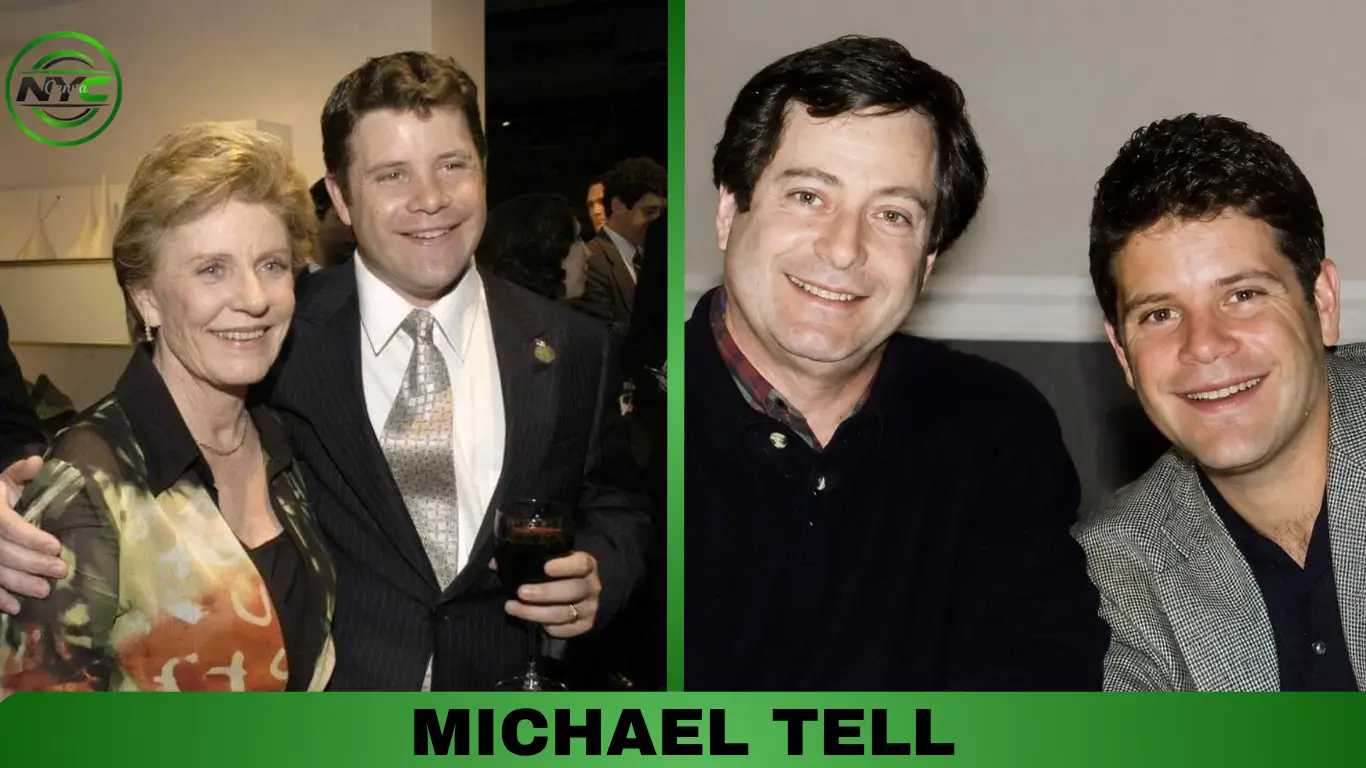
Michael Tell was an American concert promoter and newspaper publisher whose life connected the music industry, community journalism, and Hollywood history. Although he became widely known because of his brief marriage to actress Patty Duke and his biological relationship with actor Sean Astin, his professional life extended far beyond these family connections.
Tell built his early career promoting live music, working with performers, organizing concerts, and helping bring entertainment to audiences in Las Vegas. Later, he devoted decades to the Las Vegas Israelite, a newspaper serving the Jewish community in Southern Nevada. His work in both industries gave him a professional identity independent of his connection to Hollywood.
Born on March 1, 1945, Michael Tell died on April 6, 2025, at the age of 80. His life remains a subject of interest because it combined an unconventional career in entertainment with a long commitment to community publishing. While his brief marriage to Patty Duke attracted public attention, his career and family history offer a much broader picture of who he was.
Who Was Michael Tell?
Michael Tell was an American concert promoter and newspaper publisher best known publicly as Patty Duke’s former husband and Sean Astin’s biological father. Unlike Duke and Astin, who developed successful careers in acting, Tell primarily worked behind the scenes in entertainment and journalism.
His early professional life centered on live music. As a promoter, he helped arrange performances, coordinate venues, and connect artists with audiences. The work required business judgment, persistence, and an understanding of the entertainment market at a time when live rock music was becoming increasingly popular.
Tell later became closely associated with the Las Vegas Israelite, the family newspaper established by his parents. Through his work as a publisher and editor, he helped maintain a publication that covered Jewish community affairs, religious events, and local developments.
His name became familiar to a much wider audience because of his connection to Patty Duke and Sean Astin. However, his life was not defined solely by a short marriage or a question of biological parentage. His professional history stretched across several decades and included meaningful contributions to the local community where he lived and worked.
Michael Tell’s Early Life and Family Background
Michael Tell was born on March 1, 1945. His family had connections to newspaper publishing, which later became a significant part of his professional life.
His parents, Jack Tell and Beatrice Tell, established the Las Vegas Israelite in 1965. The publication was created to serve Jewish readers in Southern Nevada, providing news and information about community activities, religious life, and issues affecting Jewish residents.
Growing up around a family involved in publishing offered Tell an early connection to the world of journalism. Running a newspaper requires more than writing articles. It involves editing, production schedules, business management, advertising, and maintaining relationships with readers and contributors.
Although detailed information about Tell’s childhood, schooling, and private upbringing remains limited, his adult career suggests that he developed interests across more than one professional field.
His initial path took him toward music promotion rather than directly into journalism. This choice placed him in the entertainment business during a period when live concerts were becoming an increasingly important part of American popular culture.
Tell’s early experiences in Las Vegas would become a foundation for his later work, even as his professional direction changed over time.
Michael Tell’s Career in the Music Industry
Michael Tell began his career in entertainment while he was still a teenager. In 1961, he opened the Twin Lakes Twist, a nightclub in Las Vegas designed to give young people a place to enjoy live entertainment.
At the time, Las Vegas was already becoming famous for its casinos and major entertainment venues, but opportunities for teenage audiences were more limited. Tell recognized this gap and decided to create a venue that would attract younger customers.
His early business decisions demonstrated an interest in entertainment promotion and a willingness to take risks. Rather than waiting for established opportunities, he approached performers directly and tried to persuade them to participate in his events.
His First Major Entertainment Opportunities
One of the stories Tell later shared involved singer Bobby Darin. Tell recalled approaching Darin as a young promoter and explaining that he had limited funds but wanted to provide entertainment for teenagers in Las Vegas.
According to Tell’s recollection, Darin agreed to perform and helped him arrange an appearance by Wayne Newton. The experience gave the young promoter valuable exposure and encouraged him to continue working in the industry.
As his business developed, Tell expanded beyond his original nightclub. He began organizing concerts and working with performers whose music appealed to growing audiences across the United States.
His work required negotiation, organization, advertising, and an understanding of what audiences wanted to see. Concert promoters also faced financial risks because booking artists and securing venues involved expenses that had to be recovered through ticket sales.
Tell’s early success helped him build a business around these activities. His experience in Las Vegas eventually opened opportunities in other entertainment markets.
Michael Tell Productions and His Work in Los Angeles
After establishing himself in Las Vegas, Tell expanded his concert-promotion activities to Los Angeles. His business, known as Mike Tell Productions, allowed him to work in a larger entertainment market and develop relationships with performers and industry professionals.
He later recalled promoting concerts featuring major acts from the rock and soul scenes. His professional history included performances associated with Led Zeppelin, Black Sabbath, the Steve Miller Band, and The Doors.
These acts represented different styles within popular music, ranging from hard rock to blues-influenced rock. Their performances helped establish live music as a major part of the American entertainment business during the late 1960s and early 1970s.
Tell also recalled working with performers such as Jimi Hendrix, José Feliciano, and Al Green. His career placed him in a period when concert promotion was expanding and rock music was attracting increasingly large audiences.
Some descriptions of his national industry standing come from Tell’s own recollections. Nevertheless, his involvement in concert promotion is an established part of his professional history.
The Doors Concert That Became Part of His Story
One of the most memorable stories associated with Michael Tell’s career involved a concert by The Doors at the old Las Vegas Ice Palace.
The venue presented an unusual challenge because it had been designed for ice-related activities rather than conventional rock concerts. To create a usable performance surface, plywood was placed over the ice.
The arrangement reflected the practical difficulties of organizing concerts in venues that were not originally designed for live music. Promoters sometimes had to find creative ways to accommodate performers, audiences, equipment, and stage requirements.
For Tell, events like this became part of his experience in the entertainment business. They also illustrate how the live music scene in Las Vegas developed beyond its traditional association with casino shows and lounge performers.
His work helped bring rock music to local audiences during a period when major touring acts did not necessarily include Las Vegas on every itinerary.
Tell’s contribution to the local music scene was later recognized through his induction into the local Rock and Roll Hall of Fame. This recognition highlighted a professional chapter that is often overlooked when his name appears in articles about Patty Duke or Sean Astin.
Why Michael Tell Left Concert Promotion
Although Tell developed a successful career in music promotion, he eventually returned to Las Vegas and became involved in the family newspaper business.
His transition followed the death of his father, Jack Tell, in 1979. The family publication needed continued leadership, and Michael took on greater responsibility for helping his mother maintain it.
The change represented a major shift in his working life. Concert promotion revolved around events, performers, venues, and ticket sales. Newspaper publishing required a different routine, including editing stories, managing publication schedules, coordinating advertising, and staying connected with readers.
Tell’s decision to return to the newspaper also reflected his family’s long-standing connection to journalism.
His later career demonstrated that his interests extended beyond music. While the concert business had given him professional experience and memorable stories, publishing became the defining occupation of his later decades.
Michael Tell and the Las Vegas Israelite Newspaper
The Las Vegas Israelite was established by Michael Tell’s parents, Jack and Beatrice Tell, in 1965. The publication focused on Jewish life and community affairs in Southern Nevada.
Following his father’s death in 1979, Michael became increasingly involved in running the newspaper. He eventually served as its editor and publisher, carrying forward the work his parents had begun.
The publication covered local community events, religious celebrations, organizational activities, and subjects relevant to Jewish residents. Its focus gave readers a dedicated source of information about a community that was growing alongside the wider Las Vegas population.
Preserving a Community’s History
Local newspapers often play an important role in recording events that larger publications might not cover in detail. Community gatherings, religious milestones, charitable activities, and local concerns can all become part of a region’s historical record.
Through the Las Vegas Israelite, Tell helped preserve this type of information for Southern Nevada’s Jewish community.
He also witnessed substantial changes in Las Vegas over the decades. The city expanded from a comparatively small population center into a major metropolitan area with a much larger and more diverse community.
Tell’s newspaper adapted its coverage as the city changed. Rather than concentrating exclusively on national or international issues, it increasingly focused on local events and the everyday experiences of its readers.
His work was especially significant because maintaining a small community newspaper over many years requires persistence. Publishers must balance editorial responsibilities with the practical challenges of financing, printing, distribution, and maintaining readership.
Tell remained associated with the publication for decades, making journalism one of the longest-lasting parts of his professional life.
His Connection to the Jewish Community
Michael Tell’s work was closely connected to Jewish community life in Las Vegas. Through the newspaper, he helped document religious activities, community concerns, and the development of local Jewish institutions.
He also witnessed changes in the visibility and organization of the community. His reporting and personal recollections covered developments in religious life as Las Vegas continued to grow.
Tell’s relationship with the newspaper was not merely a business arrangement. It was also a connection to his family history and the community his parents had chosen to serve.
This legacy provides a different perspective on his life. While celebrity coverage often emphasizes his marriage to Patty Duke, his work as a publisher had a much longer influence on the community where he lived.
Michael Tell’s Marriage to Patty Duke
Michael Tell married actress Patty Duke in June 1970. Their marriage took place during a complicated period in Duke’s personal life and lasted approximately 13 days before it was annulled.
Duke was already a prominent figure in American entertainment. She had earned widespread recognition for her acting and won an Academy Award for her performance as Helen Keller in The Miracle Worker.
Her career continued through film and television, and her personal life attracted substantial public interest. As a result, her brief marriage to Tell became a notable episode in her biography.
Tell, meanwhile, was working in the entertainment industry as a concert promoter. Although their marriage brought him into the orbit of Hollywood publicity, he did not pursue a public career as an actor or celebrity personality.
Why Did Their Marriage Last Only 13 Days?
The marriage between Michael Tell and Patty Duke was extremely brief. The circumstances surrounding their relationship have been discussed in accounts of Duke’s life, particularly because she became pregnant during this period.
The marriage was annulled in July 1970. However, the short relationship later became more widely discussed because of questions about the biological father of Duke’s son, Sean Astin.
It is important to distinguish established events from speculation about the couple’s private motivations. Their marriage and annulment are documented, but a short relationship does not, by itself, explain every personal decision the people involved made.
For Tell, the marriage became a lasting part of his public identity despite occupying only a small portion of his life.
Michael Tell and Sean Astin’s Biological Relationship
Michael Tell is the biological father of actor Sean Astin, who was born on February 25, 1971.
Astin became known for his performances in films such as The Goonies, Rudy, and The Lord of the Rings trilogy. However, his family background involved a complicated question about biological parentage that remained unresolved during much of his childhood.
Patty Duke was initially married to Michael Tell for a short period. After their marriage ended, she later married actor John Astin in 1972.
John Astin raised Sean and adopted him, becoming the father figure with whom Sean grew up. For many years, Sean understood John to be his biological father as well as the man who raised him.
At another point in his childhood, Duke told Sean that entertainer Desi Arnaz Jr. was his biological father. This created further uncertainty about his parentage.
The question was eventually clarified through DNA testing in 1994, when Sean was 23 years old. The results established Michael Tell as his biological father.
How DNA Testing Clarified Sean Astin’s Parentage
The discovery was a significant moment in Sean’s understanding of his family history. It answered a question about his biological origins while introducing a new dimension to his relationship with Michael Tell.
However, the results did not erase the importance of John Astin’s role in his upbringing. John had raised and adopted Sean, and their relationship was based on years of shared family life.
Sean has acknowledged the different roles these men played in his life. His experience illustrates that biological parentage and emotional fatherhood are related but distinct aspects of family relationships.
Michael Tell became part of Sean’s life after the biological connection was established. Their relationship developed over time, and Tell spoke positively about his son and his grandchildren.
The story attracted public attention because it involved recognizable figures from Hollywood. Yet its personal significance was much greater than a celebrity revelation: it concerned identity, family history, and the ways people understand their relationships with their parents.
Michael Tell’s Relationship With Sean Astin
After DNA testing established their biological relationship, Michael Tell and Sean Astin developed a relationship of their own.
Sean did not treat the discovery as a reason to reject John Astin. Instead, he maintained his connection with the man who had raised him while also acknowledging Michael Tell as his biological father.
This approach allowed Sean to recognize different parts of his family history without reducing fatherhood to genetics alone.
Tell also spoke positively about their relationship. In a later interview, he described his connection with Sean warmly and expressed pride in his son and his three granddaughters.
Their relationship demonstrated that discovering a biological connection later in life does not necessarily mean that existing family bonds must be abandoned. People can recognize their origins while continuing to value the relationships that shaped their upbringing.
For Tell, the relationship with Sean became an important part of his later family life. For Sean, it provided a clearer understanding of his biological background while allowing him to maintain meaningful connections with the people who had helped raise him.
Michael Tell’s Family and Later Marriage
Although Michael Tell’s brief marriage to Patty Duke is the relationship most often mentioned in celebrity biographies, he had a family life beyond that chapter.
At the time of his death in 2025, he was survived by his wife, Nelcy Tell, and his son, Sean Astin. His surviving relatives also included his three granddaughters and other members of the Tell family.
Public information about his later marriage is limited. Michael and Nelcy generally kept their personal lives away from celebrity media, and detailed accounts of their relationship are not widely available.
His family connections also included his brothers and nieces. Those relationships formed part of his private world, separate from his professional activities in music and journalism.
The limited public information about his later family life is consistent with the way Tell lived. He was not an entertainer who routinely shared personal details with audiences, and much of his story comes from his professional history and occasional interviews.
Michael Tell’s Net Worth
Michael Tell’s exact net worth has not been reliably established through publicly available financial information.
His career included concert promotion and decades of work in newspaper publishing. Both fields can generate income, but their financial outcomes depend on business expenses, ownership arrangements, investments, property, debts, and other personal circumstances.
Without reliable information about these factors, it is not possible to calculate his wealth accurately.
Some celebrity biography websites publish estimated net worth figures for people connected to famous actors. Such numbers should be treated cautiously when they are not supported by documented financial records.
Tell’s professional accomplishments are better established than his personal financial position. His work in concert promotion and his long association with the Las Vegas Israelite provide a more dependable account of his career than an unverified dollar amount.
Michael Tell’s Death and Legacy
Michael Tell died on April 6, 2025, at the age of 80. His death marked the end of a life that connected the music industry, local journalism, and an unusual chapter of Hollywood history.
His professional legacy included helping bring major musical acts to Las Vegas during the development of its live rock scene. He later spent decades maintaining a newspaper that served the Jewish community of Southern Nevada.
He was remembered not only for his connection to Patty Duke and Sean Astin but also for his contribution to the community where he worked and lived.
Remembering His Work Beyond Hollywood
Tell’s life illustrates how a person’s public reputation can become associated with a single event even when their career encompasses much more.
His brief marriage to Patty Duke and his biological relationship with Sean Astin made his name familiar to entertainment audiences. Yet his professional work in Las Vegas lasted for decades and touched different parts of the city’s cultural life.
His career as a concert promoter reflected the energy of the live music industry during a period of major change. His later work as a publisher demonstrated a commitment to community journalism and the preservation of local history.
These achievements form an important part of his legacy.
Rather than viewing Tell only through the circumstances of his marriage, it is more accurate to recognize the full range of his experiences: a young promoter who built a business, a publisher who continued his family’s work, and a father who later developed a relationship with his adult son.
Frequently Asked Questions About Michael Tell
Who was Michael Tell?
Michael Tell was an American concert promoter and newspaper publisher. He was known for his work in the live music industry, his long association with the Las Vegas Israelite, and his brief marriage to actress Patty Duke.
When was Michael Tell born?
Michael Tell was born on March 1, 1945.
When did Michael Tell die?
He died on April 6, 2025, at the age of 80.
Was Michael Tell married to Patty Duke?
Yes. Michael Tell and Patty Duke married in June 1970, but their marriage lasted approximately 13 days before it was annulled.
Was Michael Tell Sean Astin’s biological father?
Yes. DNA testing in 1994 established Michael Tell as Sean Astin’s biological father.
Who raised Sean Astin?
Sean Astin was raised by Patty Duke and actor John Astin, who later married Duke and adopted Sean. John remained an important father figure in Sean’s life.
What did Michael Tell do for a living?
Michael Tell worked as a concert promoter before becoming a newspaper publisher. He organized live music events and later served as editor and publisher of the Las Vegas Israelite.
Which musicians did Michael Tell promote?
His career included concert promotion associated with performers and groups such as Led Zeppelin, Black Sabbath, the Steve Miller Band, and The Doors. He also recalled working with artists including Jimi Hendrix, José Feliciano, and Al Green.
Was Michael Tell married after Patty Duke?
Yes. His later wife was Nelcy Tell, who was named among his surviving family members after his death.
What was Michael Tell’s net worth?
His exact net worth has not been reliably verified. Specific figures published online should be treated as estimates rather than confirmed financial information.
How many grandchildren did Michael Tell have?
He had three granddaughters through his son, Sean Astin.
Why is Michael Tell remembered?
Michael Tell is remembered for his concert-promotion career, his decades of work with the Las Vegas Israelite, his brief marriage to Patty Duke, and his biological relationship with Sean Astin.
Conclusion
Michael Tell lived a life that extended far beyond his brief marriage to Patty Duke. He began working in entertainment as a teenager, promoted live music in Las Vegas and Los Angeles, and later devoted decades to publishing the Las Vegas Israelite.
His biological connection to Sean Astin brought additional public attention to his name after DNA testing clarified a longstanding family question. Their relationship also highlighted the distinction between biological parentage and the bonds formed through raising and supporting a child.
Tell died in 2025 at the age of 80, leaving behind a professional legacy in music promotion and community journalism. His story is most complete when these achievements are considered alongside his family history rather than allowing one short marriage to define his entire life.
For More Visits: NycMagazines.net