










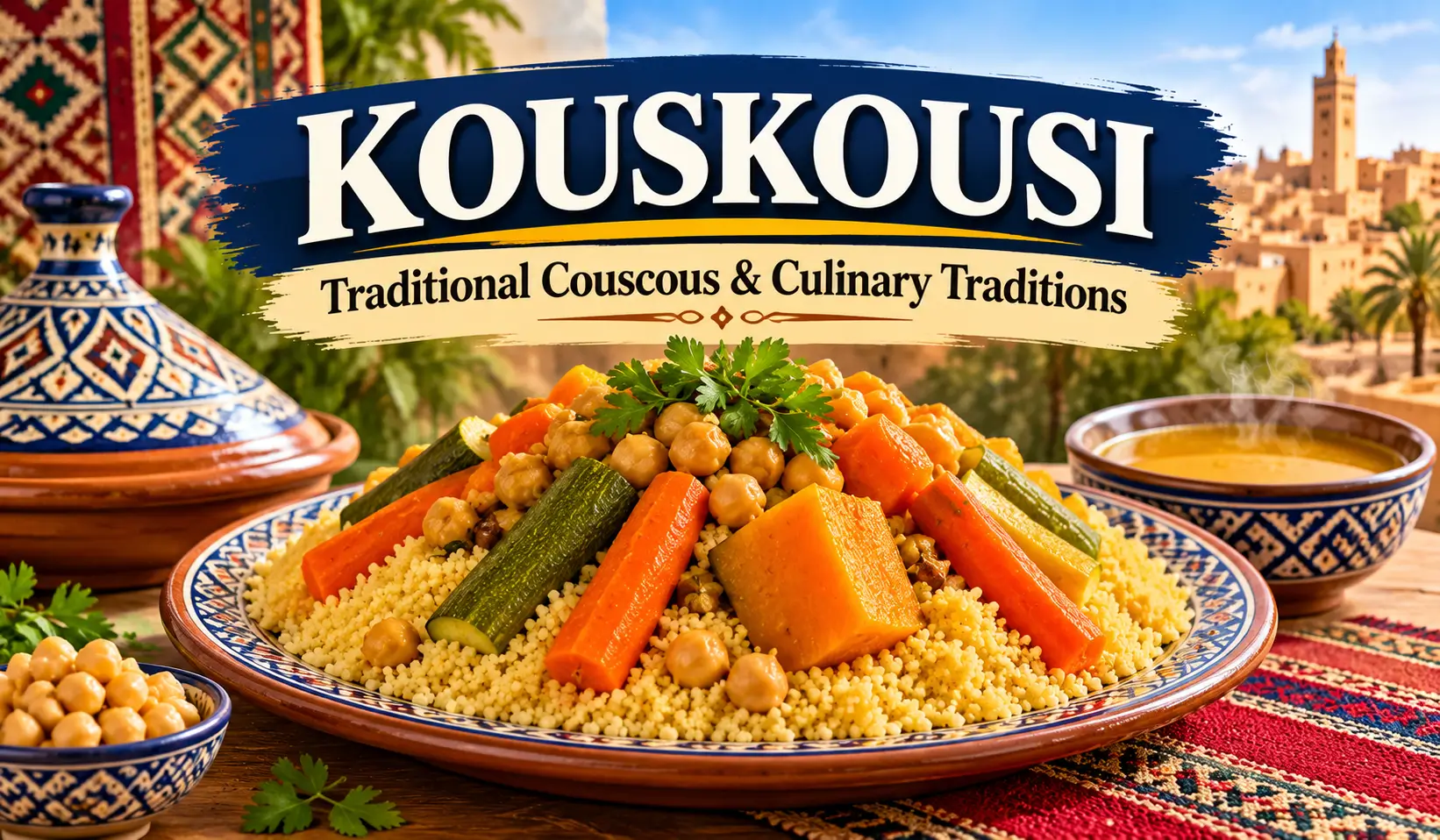
Kouskousi is an interesting food-related term that has attracted attention among people exploring Mediterranean and North African cuisine. The name resembles couscous, a traditional semolina-based food enjoyed across several countries, but its exact meaning can vary depending on the spelling, language, and culinary context. This similarity often creates confusion about whether Kouskousi is a separate traditional dish, another name for couscous, or a reference to a different type of wheat-based food.
Understanding Kouskousi requires looking at the established dishes associated with similar names. Traditional North African couscous is made from small semolina granules that are prepared through steaming. Greek cuisine also has a related name, kouskousaki, which refers to small pasta. Although these foods share some similarities, their production methods and textures are different.
This guide explores the meaning of Kouskousi, its connection to traditional couscous, regional food traditions, ingredients, preparation methods, nutritional characteristics, and ways to enjoy these dishes at home.
What Is Kouskousi?
Kouskousi is an uncommon spelling associated in modern online food content with couscous and other small wheat-based foods. However, it does not have one universally established definition in authoritative culinary references.
The best-known related food is couscous, a traditional preparation made from small granules of durum wheat semolina. It is widely enjoyed throughout North Africa, particularly in Morocco, Algeria, Tunisia, and Mauritania.
Another similar term is the Greek word kouskousaki, which describes small, round pasta. Unlike traditional couscous, this product is manufactured using pasta-making techniques and is generally boiled before serving.
The distinction is important because similar names do not necessarily describe identical foods. If someone encounters Kouskousi on a restaurant menu, recipe website, or food package, checking the ingredients and preparation instructions can help identify what is actually being described.
Understanding the Connection Between Kouskousi and Couscous
Couscous is the most recognizable food associated with the Kouskousi spelling. It has a long history in North African cooking and remains an important part of everyday meals and special occasions.
Traditional couscous is generally prepared using durum wheat semolina and water. The semolina is gradually moistened and rolled into small granules before being sieved and steamed.
The finished product has a light texture and a mild, slightly nutty flavor. It works well with vegetables, legumes, meat, fish, and flavorful sauces.
Why Are the Names Similar?
Food names often change when they move between languages and regions. Differences in pronunciation, transliteration, and local spelling can produce several versions of a familiar word.
Couscous has different forms across languages and culinary traditions. The spelling Kouskousi appears in some modern online descriptions, but that does not establish it as a universally accepted alternative name.
Greek kouskousaki is another related-looking term, although it refers to a small pasta product rather than necessarily the traditional North African preparation.
Understanding these distinctions helps prevent inaccurate descriptions of regional food traditions.
Origins and Cultural Background of Couscous
The established history behind Kouskousi-related food discussions is closely connected to North African couscous.
Couscous has deep roots in the Maghreb, a region encompassing countries including Morocco, Algeria, and Tunisia, alongside Mauritania. It has been prepared across generations and developed into an important part of the region’s culinary identity.
Its traditional preparation involves more than simply cooking an ingredient. Families have developed particular techniques for preparing semolina, steaming the granules, seasoning accompanying dishes, and serving meals during gatherings.
In 2020, UNESCO recognized the knowledge, practices, and traditions associated with couscous through a joint nomination involving Algeria, Mauritania, Morocco, and Tunisia.
This recognition highlights the shared cultural importance of couscous rather than assigning its entire history to one modern country.
Couscous in Family and Community Life
Couscous is often associated with hospitality, family gatherings, and traditional celebrations.
In many households, preparing a large couscous meal can involve several stages. The semolina is prepared separately, while vegetables, meat, or other ingredients cook in a seasoned broth.
The finished dish is assembled in a large serving arrangement, allowing family members and guests to enjoy the meal together.
Regional recipes differ, but the importance of sharing food remains a familiar part of couscous culture.
Main Ingredients Used in Kouskousi-Related Dishes
The ingredients depend on which food the name refers to. Traditional couscous and Greek kouskousaki have different preparation requirements, even though both are commonly associated with wheat-based ingredients.
Durum Wheat Semolina
Durum wheat semolina is the main ingredient in traditional couscous. It is a coarse wheat product that can be shaped into small granules with the addition of water.
Its texture makes it suitable for producing the light, separate pieces associated with properly prepared couscous.
Water
Water helps bind semolina granules during traditional couscous production. The amount must be controlled carefully because too much moisture can create heavy or clumped pieces.
Vegetables
Vegetables are common ingredients in couscous meals. Depending on the regional recipe, these may include:
- Carrots
- Pumpkin
- Zucchini
- Onions
- Tomatoes
- Turnips
- Chickpeas
Vegetables contribute flavor, color, and different textures to the finished meal.
Meat and Protein
Couscous can be served with lamb, chicken, beef, fish, or legumes. Some preparations are entirely vegetarian, while others include several protein ingredients.
Chickpeas are particularly common in North African recipes because they provide additional texture and make the meal more substantial.
Herbs and Spices
Seasonings help create the distinctive character of different regional preparations. Common choices include cumin, coriander, ginger, cinnamon, paprika, turmeric, parsley, and black pepper.
The combination depends on local cooking traditions and individual preferences.
How Is Traditional Couscous Prepared?
Traditional couscous preparation involves several stages, particularly when using handmade semolina granules rather than commercially prepared instant products.
Step 1: Preparing the Semolina
The process begins with durum wheat semolina. Small amounts of water are gradually added while the semolina is worked by hand to create tiny granules.
The granules are then passed through a sieve to separate different sizes and remove larger pieces.
Step 2: Steaming the Granules
Traditional couscous is commonly steamed using a special cooking vessel called a couscoussier.
The lower section holds the broth or stew, while the upper section allows steam to pass through the couscous.
Steaming helps produce a light texture and prevents the granules from becoming excessively wet.
Step 3: Preparing the Accompanying Broth
While the couscous cooks, vegetables, meat, legumes, and seasonings can be prepared in the broth.
Cooking times depend on the ingredients. Harder vegetables and meat generally require more time than softer ingredients.
Step 4: Combining and Serving
Once the couscous and accompanying ingredients are ready, they are arranged together for serving.
The granules are often placed on a large dish, with vegetables and meat arranged on top. Broth can be served separately or added according to preference.
This traditional method produces a satisfying meal with a combination of soft grains, flavorful vegetables, and seasoned ingredients.
Kouskousi vs. Greek Kouskousaki: What Is the Difference?
One reason the term Kouskousi creates confusion is its similarity to Greek kouskousaki.
Although the names are related in appearance, traditional couscous and small Greek pasta are not interchangeable.
| Feature | North African Couscous | Greek Kouskousaki |
|---|---|---|
| Main ingredient | Durum wheat semolina | Wheat flour or semolina |
| Production | Small granules formed and steamed | Produced using pasta-making techniques |
| Cooking method | Steaming or quick preparation, depending on product | Usually boiling |
| Texture | Light and granular | Soft and pasta-like |
| Common uses | Stews, vegetables, meat, salads | Soups, sauces, and side dishes |
The table provides a general comparison. Specific ingredients and preparation methods can vary between products and recipes.
The most reliable way to identify an unfamiliar product is to examine its packaging rather than relying on the name alone.
Nutritional Characteristics of Couscous
Traditional couscous is primarily a source of carbohydrates. It also provides some protein and small amounts of other nutrients.
Its overall nutritional value depends on the type of wheat product, serving size, and ingredients served alongside it.
Carbohydrates and Energy
Couscous provides carbohydrates that contribute to the body’s energy requirements. This makes it a common accompaniment to vegetables, meat, fish, and legumes.
Protein Content
Wheat-based couscous contains some plant protein. However, it is not generally considered a complete protein source on its own.
Combining it with chickpeas, beans, meat, fish, or other protein-rich ingredients can make a meal more nutritionally balanced.
Fiber
Whole-wheat couscous generally contains more dietary fiber than refined varieties.
Fiber contributes to digestive health and can support a balanced eating pattern.
Important Dietary Considerations
Standard couscous and most traditional wheat-based pasta products contain gluten. They are therefore unsuitable for people who need to avoid gluten unless a clearly labeled gluten-free alternative is used.
People with specific dietary requirements should check product ingredients and nutritional information before purchasing.
Popular Ways to Enjoy Couscous
Couscous is versatile and can be prepared in several ways. Its mild flavor allows it to work with different ingredients, seasonings, and cooking styles.
Traditional Vegetable Couscous
Vegetable couscous is one of the familiar North African preparations. It combines steamed semolina with vegetables such as carrots, pumpkin, zucchini, and chickpeas.
A seasoned broth brings the ingredients together and gives the meal its characteristic flavor.
Chicken Couscous
Chicken couscous combines cooked chicken with vegetables, spices, and semolina granules.
It is a practical option for family meals because the ingredients can be prepared together and served in generous portions.
Lamb Couscous
Lamb couscous is a rich preparation often associated with traditional North African cooking.
The meat is slowly cooked with vegetables and seasonings until tender. The resulting broth can be served with the couscous to provide additional flavor.
Seafood Couscous
Some coastal communities prepare couscous with fish and seafood. These versions may include tomatoes, herbs, spices, and vegetables.
The exact ingredients depend on regional preferences and the seafood available.
Couscous Salad
Couscous can also be cooled and used as the base for a salad.
Tomatoes, cucumber, parsley, lemon juice, olive oil, and chickpeas create a refreshing combination. It can be served as a side dish or a light meal.
Why Is Kouskousi Attracting Online Attention?
Unfamiliar food names often generate curiosity, particularly when they resemble established dishes.
Kouskousi has appeared in online food articles discussing couscous, Mediterranean cuisine, ingredients, and traditional cooking. Readers encountering the spelling may search for an explanation because they want to know whether it represents a new dish or a regional food variation.
There are several reasons this type of keyword can attract attention.
Unfamiliar spelling: People may recognize the word as something related to couscous but want confirmation.
International food interest: Online cooking content makes it easier to discover dishes from different cultures.
Recipe searches: People may encounter the name in a menu, cooking video, or recipe and want to understand the ingredients.
Regional terminology: Different languages and transliterations can make familiar foods appear unfamiliar.
For content creators, this creates an opportunity to explain the established culinary traditions accurately instead of presenting uncertain terminology as confirmed history.
Tips for Buying and Preparing Couscous
Anyone interested in trying the food associated with Kouskousi should begin by identifying the actual product.
A few simple considerations can help:
- Check whether the package contains traditional couscous, pearl couscous, or small pasta.
- Read the ingredient list to identify the type of wheat used.
- Follow the manufacturer’s cooking instructions.
- Choose a suitable grain size for the intended recipe.
- Use vegetables, legumes, herbs, and suitable protein ingredients to create a balanced meal.
- Store unopened products in a cool, dry place.
- Keep prepared couscous refrigerated in a suitable covered container.
Traditional handmade couscous and commercially prepared products may require different cooking techniques. Following the correct method helps achieve a better texture.
Frequently Asked Questions About Kouskousi
1. What is Kouskousi?
Kouskousi is an uncommon food-related spelling associated in modern online descriptions with couscous and similar wheat-based foods. Its exact meaning is not universally established, so the original recipe or product context matters.
2. Is Kouskousi the same as couscous?
Some online descriptions use Kouskousi as another form of couscous. However, the spelling alone does not establish that meaning. Traditional North African couscous is made from small semolina granules and has a well-documented culinary history.
3. Where does couscous originate?
Couscous has deep historical and cultural roots in North Africa, particularly the Maghreb. Its preparation and consumption traditions are shared across several communities, including those in Morocco, Algeria, Tunisia, and Mauritania.
4. What is Kouskousi made from?
When the term refers to traditional couscous, its main ingredients are durum wheat semolina and water. Accompanying dishes may include vegetables, chickpeas, meat, fish, herbs, and spices.
5. Is Kouskousi a type of pasta?
The answer depends on the intended meaning. Traditional couscous is made from semolina granules through a process different from conventional pasta production. Greek kouskousaki, however, is a small pasta product.
6. Is couscous healthy?
Couscous can be included in a balanced diet. It provides carbohydrates and some protein, while whole-wheat varieties generally provide more fiber. Its nutritional value also depends on portion size and accompanying ingredients.
7. Does Kouskousi contain gluten?
Traditional wheat-based couscous and most related wheat pasta products contain gluten. People with celiac disease or gluten sensitivity should select clearly labeled gluten-free alternatives.
8. Can couscous be served with vegetables?
Yes. Couscous is commonly served with vegetables such as carrots, zucchini, pumpkin, tomatoes, and chickpeas. It can also be used in salads with fresh herbs and lemon dressing.
Final Thoughts
Kouskousi is an interesting term because it connects to familiar foods while leaving room for confusion about its exact meaning. The strongest culinary connection is with traditional North African couscous, a semolina-based preparation with a long history and an important place in regional food culture.
However, similar names such as Greek kouskousaki describe different wheat-based products, making it important to distinguish between them. Ingredients, preparation methods, and regional context provide a more reliable explanation than spelling alone.
For anyone interested in exploring Kouskousi, learning about traditional couscous is a useful starting point. Its combination of semolina, vegetables, legumes, spices, and flavorful broths demonstrates how a simple ingredient can become part of a rich and diverse culinary tradition.
For More Visits: NycMagazines.net