











Mike Rattler is best known as the father of NFL quarterback Spencer Rattler, but his story is more interesting when viewed through the lens of fatherhood rather than celebrity. Long before Spencer became a recognizable name in American football, he was a young athlete growing up in Arizona with a family that supported his interest in sports.
Mike has generally remained away from the spotlight that followed his son. That makes his role different from that of a celebrity parent who actively builds a public profile. Instead, his importance comes from the family environment in which Spencer developed, the encouragement he received as a young athlete, and the support that continued as his football career became increasingly demanding.
There is limited publicly documented information about Mike’s private life, so it would be misleading to create an elaborate biography around details that have never been clearly established. What can be discussed meaningfully is his relationship with Spencer and the part fatherly support played in the quarterback’s long athletic journey.
Who Is Mike Rattler?
Mike Rattler is the father of Spencer Rattler, the professional quarterback whose football career took him from Arizona youth sports to college football and eventually the NFL. Spencer’s public career has naturally brought attention to his parents, even though Mike himself has maintained a much quieter profile.
That distinction is important. Mike is not known primarily because he pursued fame. His name became familiar to football followers because of his son’s development and success.
Public accounts consistently identify Mike as Spencer’s father, while information about Mike’s own early life remains relatively limited. This makes it better to focus on the part of his life that is genuinely relevant to readers: his role as a father and his connection to Spencer’s football development.
Mike Rattler as Spencer Rattler’s Father
Fatherhood is the central part of Mike Rattler’s public story. Spencer’s journey did not begin when he appeared on television as a highly rated quarterback. It began when he was a child discovering his natural interest in sports.
Mike was present during those early years, when Spencer’s abilities were still developing. One particularly notable part of Spencer’s football story is that his father recognized his unusual ability with a football when Spencer was very young.
Recognizing talent, however, is only the beginning. A young athlete needs opportunities to practice, compete, make mistakes, and discover whether the sport is something he genuinely wants to pursue. Mike’s role can therefore be understood as part of the foundation around Spencer rather than as the sole reason for his eventual success.
How Mike Supported Spencer’s Early Interest in Sports

Spencer did not develop as an athlete in isolation. Like many children, he had opportunities to explore different sports before eventually concentrating more heavily on football.
This is an important aspect of Mike’s fatherhood. Supporting a talented child does not always mean deciding their entire future at an early age. It can mean allowing the child to discover what he enjoys while providing encouragement and structure along the way.
For Spencer, football eventually became the sport that stood out most strongly. His development from a young athlete into a highly regarded quarterback suggests that his interest continued to grow as the competition became more serious.
Recognizing a Son’s Potential
One of the most memorable details associated with Mike’s relationship with Spencer is his early reaction to his son’s throwing ability.
According to an ESPN profile, Mike noticed Spencer’s ability to throw and catch a football when Spencer was only a toddler. The significance was not necessarily that a toddler could play football professionally; rather, Mike noticed something unusual and recognized that his son seemed naturally comfortable with the ball.
That kind of observation can be meaningful in parenting. Children often show interests and abilities before they understand what those abilities might eventually become. A supportive parent can notice those moments without necessarily knowing where they will lead.
The Difference Between Talent and Development
Natural ability can open a door, but it cannot carry an athlete through an entire career.
Spencer’s later football journey required training, coaching, competition, discipline, and the ability to deal with both success and disappointment. Those elements belong to Spencer’s own work and should not be attributed entirely to his father.
Mike’s contribution is better understood as support around that process. A parent can create stability and encouragement, but ultimately the athlete has to perform, improve, adapt, and make difficult decisions himself.
That distinction makes the story of Mike and Spencer more realistic. It avoids turning fatherhood into a simple formula in which a parent’s influence automatically produces professional success.
Mike Rattler and the Importance of Family
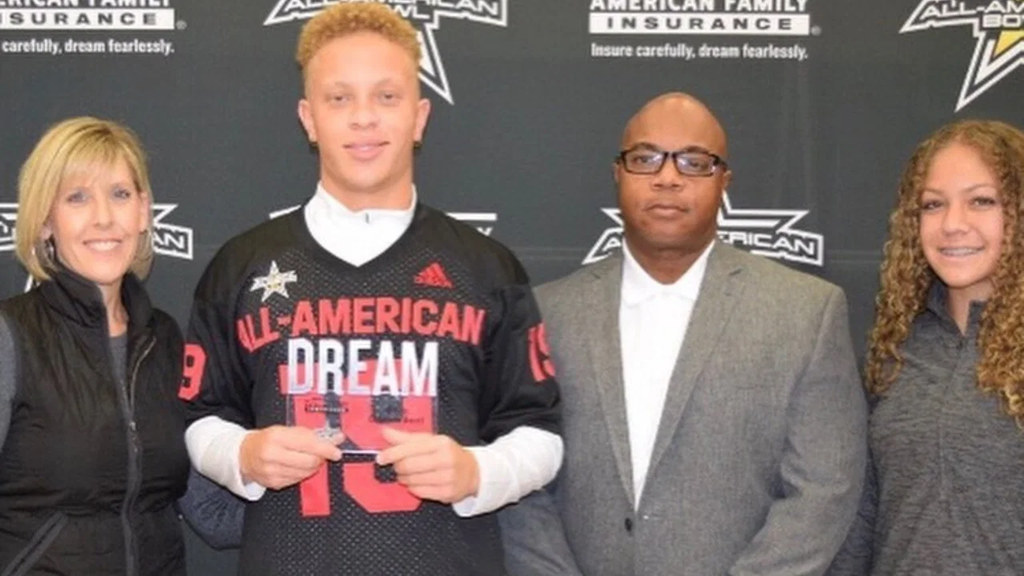
For a young athlete, family can provide something that coaches and teammates cannot always provide: a sense of identity outside the sport.
Football can become overwhelming when a player is constantly judged by performances. A quarterback, in particular, receives considerable attention because so much of a team’s offense depends on that position.
Having a family environment outside football can help keep an athlete grounded. Mike’s relationship with Spencer is therefore significant not simply because he supported football, but because he was part of Spencer’s life before football became his profession.
Growing Up With a Football Dream
Spencer’s rise did not happen overnight. His development began in Arizona, where he became increasingly serious about football and eventually emerged as a highly regarded young quarterback.
Mike’s role during those formative years was that of a parent watching his son’s interests develop.
This stage of an athlete’s life is often overlooked. Professional players are introduced to audiences through statistics, highlights, draft coverage, and game performances. The years of ordinary practices, family conversations, transportation, encouragement, and small improvements are much less visible.
That is where the story of Mike Rattler becomes relevant.
Mike Rattler’s Understanding of Sports
Mike’s own connection with sports has also been mentioned in public profiles, including reports describing football involvement and coaching experience. However, the available information about his personal sporting history is not nearly as extensive as the information available about Spencer.
For that reason, it is more useful to view Mike’s sports background as part of the environment around Spencer rather than turning it into a separate celebrity biography.
His familiarity with athletics could give him an understanding of the discipline and demands involved, but Spencer’s career ultimately belongs to Spencer.
The Role of a Parent in Youth Sports
Parents can have a major impact on how children experience competitive sports.
A parent who is too distant may fail to provide encouragement, while a parent who becomes overly controlling can make the activity feel like an obligation. The healthiest approach often involves supporting a child’s ambition while allowing the child to develop ownership of the journey.
Mike’s story is interesting because Spencer’s career eventually became his own. As Spencer moved from youth football to high school, college, and professional football, the decisions became increasingly his responsibility.
That is a natural part of growing from a child athlete into an adult professional.
Mike Rattler During Spencer’s High School Years
Spencer’s high school years were an important period in his development. He became increasingly recognized for his quarterback ability and attracted attention beyond his immediate community.
For parents, this can be a complicated stage. A child who was once simply playing a favorite sport may suddenly be receiving attention from coaches, recruiters, media outlets, and other people who have an interest in his athletic future.
Mike’s role during this stage was not simply that of a spectator. He was part of the family support system surrounding Spencer as the level of competition and expectations increased.
When Football Became More Than a Hobby
There is a major difference between a child enjoying football and a young athlete realizing that football could become a serious career path.
Spencer eventually reached that second stage.
As his abilities developed, football became an increasingly important part of his identity. His performances created opportunities that eventually led to major college programs and national attention.
For Mike, this meant watching his son’s childhood interest become a serious pursuit. That transition can be exciting for a parent, but it also brings additional pressure and responsibility.
Mike and Spencer’s College Football Journey
Spencer’s college career included two major chapters: Oklahoma and South Carolina. Both experiences shaped his development as a quarterback.
His time at Oklahoma brought significant expectations, while his later move to South Carolina provided an opportunity to begin another chapter.
From a father’s perspective, these changes represent more than football statistics. College athletes are young adults making decisions about education, competition, coaching, and their future careers.
Family support can become particularly important when those decisions do not unfold exactly as originally expected.
Supporting Spencer Through Change
Spencer’s move from Oklahoma to South Carolina became one of the defining changes of his college career.
Changing programs can be challenging for any athlete. It means entering a new environment, building relationships with new teammates, learning a different system, and managing expectations surrounding the transfer.
For an athlete whose name is already widely known, the pressure can be even greater.
Mike remained part of Spencer’s support network during this period. The family connection provided continuity while Spencer entered a new stage of his football career.
A Father’s Role During Difficult Moments
An athlete’s journey is rarely a straight line.
There are moments when expectations are exceeded and moments when things do not go according to plan. Quarterbacks can face particularly intense criticism because their mistakes are often highly visible.
Spencer experienced both the excitement of being a highly regarded quarterback and the disappointment of losing his starting position at Oklahoma.
Those experiences can be valuable because they force athletes to develop resilience. For parents, they also create opportunities to provide perspective when public criticism becomes difficult to handle.
Mike Rattler and the Oklahoma Setback
Spencer’s Oklahoma experience included a major turning point when he lost the starting quarterback role. The change became a significant part of his football story and ultimately contributed to his decision to continue his career elsewhere.
Mike’s support during difficult periods illustrates an important aspect of fatherhood: being present when things are not going well.
It is easy to celebrate an athlete after a great performance. The more meaningful test of a support system can come after disappointment.
Speaking Up for His Son
Mike has also publicly spoken up when he believed information about Spencer’s recruitment or career was being represented incorrectly.
One example came during Spencer’s transfer process, when Mike publicly responded to claims concerning Arizona State and his son’s recruitment. He rejected the suggestion that money-related demands had driven the situation and directly clarified his position.
This episode provides an interesting look at another dimension of fatherhood. Supporting a son does not always mean staying completely silent. Sometimes a parent chooses to correct a public narrative when they believe it is unfair or inaccurate.
Mike Rattler and Spencer’s NFL Transition
Spencer eventually moved from college football toward the NFL, turning years of development into a professional opportunity.
For Mike, this represented a remarkable progression. The child whose throwing ability had attracted his father’s attention eventually reached the highest level of American football.
The transition from college to professional football is also a moment when a parent’s role changes again. The athlete is now an adult professional responsible for his own career.
The father can still provide encouragement and perspective, but the athlete must increasingly navigate the professional world independently.
What Makes Mike Rattler’s Fatherhood Story Interesting?
The most interesting part of Mike Rattler’s story is not a list of personal statistics or an elaborate biography. It is the long-term relationship between a father and a son whose passion eventually became a profession.
Mike represents the part of Spencer’s story that existed before national attention.
He was there when Spencer was a child, before college football, before the NFL, and before every game became something fans could watch and analyze.
That makes his role meaningful even though he is not the person throwing the football on Sundays.
Fatherhood Beyond Football
It would be a mistake to reduce Mike’s entire relationship with Spencer to football.
A father can influence a child’s life through everyday experiences that never appear in sports coverage. Conversations, encouragement, family routines, discipline, and emotional support can all shape a child’s development.
Football simply happens to be the part of Spencer’s life that became public.
Mike’s significance therefore extends beyond the field. His story reflects a broader reality: successful athletes are also sons, daughters, siblings, and members of families that supported them long before they became recognizable.
Mike Rattler and Family Privacy
Because Mike is not a professional athlete himself, relatively little verified information is available about many aspects of his personal life.
That limitation should be respected.
There is a tendency online to fill gaps in celebrity biographies with exact ages, financial estimates, personal claims, or elaborate family histories. When those details cannot be clearly established, presenting them as fact can make an article less trustworthy.
A stronger article does not need to invent information. It can provide useful context while being transparent about what is and is not publicly established.
Case Study: Early Recognition of Talent
Mike’s relationship with Spencer offers a useful example of how parents can recognize a child’s ability without knowing exactly where it will lead.
A young child may show unusual coordination, speed, creativity, or confidence. The parent’s role can be to notice those characteristics and provide opportunities for development.
In Spencer’s case, his early ability with a football eventually became the foundation for a serious athletic career.
The lesson is not that every talented child will become a professional athlete. Instead, it shows the value of recognizing potential while allowing the child to develop naturally.
Case Study: Supporting a Child After Disappointment
Spencer’s college journey also provides a second lesson.
Young athletes sometimes experience setbacks that can feel devastating at the time. Losing a starting position, changing schools, or facing criticism can affect confidence.
A supportive parent can help a young athlete understand that one setback does not determine an entire future.
Spencer’s move to South Carolina demonstrated that a difficult chapter can become an opportunity to rebuild and continue developing.
Case Study: From Childhood Interest to Professional Career
The third lesson is about patience.
There was a long period between Spencer’s early childhood football experiences and his eventual professional career. That gap included years of practice, coaching, competition, education, and personal development.
This is an important reminder that professional athletes are not created by one moment of talent.
Mike’s role as a father existed throughout that broader process. His story is therefore less about one dramatic event and more about the consistency of family support over time.
Common Misconceptions About Mike Rattler
One misconception is that Mike’s identity can be fully explained by his son’s fame. While Spencer’s career is the main reason the public knows Mike’s name, Mike is still an individual with a life outside football.
Another misconception is that every detail appearing on biography websites is automatically verified. That is not the case. Different websites may repeat the same information without establishing where it originated.
A third misconception is that parental influence means a parent is responsible for a child’s professional success. Spencer’s achievements required his own effort, ability, decisions, and resilience.
Why Mike Rattler’s Story Matters
The story of Mike Rattler matters because it offers a look at the less visible side of professional sports.
Fans usually see the finished product: the quarterback on the field, the highlights, the statistics, and the competition.
They do not always see the family members who were there when the athlete was still learning.
Mike’s story helps fill that human side of the picture without taking credit away from Spencer. It shows how a parent’s encouragement can coexist with an athlete’s individual responsibility.
Frequently Asked Questions About Mike Rattler
Who is Mike Rattler?
Mike Rattler is the father of professional football quarterback Spencer Rattler. He became publicly known largely because of his son’s football career.
Is Mike Rattler Spencer Rattler’s father?
Yes. Mike Rattler is Spencer Rattler’s father. Public reporting about Spencer’s upbringing consistently identifies Mike as his dad.
What role did Mike Rattler play in Spencer’s football journey?
Mike was part of Spencer’s family support system from his early years. He recognized his son’s natural ability with a football and supported his development as Spencer became more serious about the sport.
Did Mike Rattler play football?
Public profiles have described Mike as having a connection to football and coaching, but detailed information about his own playing career is limited. It is therefore better not to exaggerate his sporting background.
Is Mike Rattler a professional football player?
No. Mike is known publicly primarily as Spencer Rattler’s father rather than as a professional football player.
Does Mike Rattler have a public career?
Some public profiles describe Mike as having worked in sales, while other accounts mention his involvement with coaching. However, his professional life has received far less attention than Spencer’s football career.
Was Mike involved when Spencer was young?
Yes. Accounts of Spencer’s early development describe Mike noticing his son’s ability with a football at a very young age.
Did Mike support Spencer during difficult football periods?
Mike has remained publicly connected to Spencer’s career and has spoken publicly during important moments, including the period surrounding Spencer’s transfer from Oklahoma.
Why is Mike Rattler less famous than Spencer?
Spencer became a professional athlete whose performances naturally attract media coverage. Mike has largely remained outside that spotlight, so most public interest in him comes from his relationship with his son.
What can be learned from Mike Rattler’s role as a father?
His story demonstrates the importance of recognizing a child’s interests, providing encouragement, remaining supportive through setbacks, and allowing the child to eventually take ownership of his own path.
Final Thoughts on Mike Rattler
Mike Rattler’s story is ultimately a story of fatherhood before fame. Before Spencer Rattler became a professional quarterback, he was a young boy discovering his athletic abilities. Mike was part of that early environment, watching his son’s potential develop and supporting him as football became an increasingly important part of his life.
What makes Mike’s role particularly interesting is that he did not need to become a celebrity himself to matter in Spencer’s story. His contribution was largely personal: being present, recognizing potential, providing encouragement, and supporting his son through both opportunities and difficult moments.
At the same time, Spencer’s achievements belong to Spencer. His development required years of his own work, discipline, decisions, and resilience. A good father can provide a foundation, but the athlete ultimately has to build the career.
That balance is what makes the story of Mike Rattler worth exploring. He is not simply a name attached to a professional quarterback. He represents the often-unseen parental support that can exist behind an athlete’s public journey. And while much of his private life remains outside the public record, his place as Spencer Rattler’s father gives readers an opportunity to look beyond the football highlights and understand the family foundation behind the player.
For More Visits: NycMagazines.net
Also Read: Anne Steves: The Private Life and Story Behind Rick Steves’ Ex-Wife